Key takeaways
- Hair breakage happens when the inner cuticle scales fall apart, often caused by heat damage, over-processing from dyes or relaxers, stress, diet, or underlying conditions like hypothyroidism.
- To prevent breakage, limit heat-styling tools, extend the time between chemical treatments, use wide-tooth combs, and avoid tight ponytails or elastic bands that pull on your hair.
- It’s best to consult a healthcare professional if hair breakage continues despite taking steps to reduce it. They can help determine if there is an underlying cause that may require medical treatment.
Hair breakage can be caused by factors such as stress, heat, and underlying health conditions.
Healthy hair depends on an inner cuticle with overlapping scales that keep the strands together.
When these scales fall apart, the hair can get dry and eventually separate, leading to damage. This causes breakage, along with other symptoms, such as frizz and dryness.
Learn more about some of the most common causes of hair breakage and what you can do about them.
1. Diet
Certain nutrients help your hair grow and stave off breakage from damage. The International Society of Hair Restoration Surgery (ISHRS) explains that the following are important for hair health:
- biotin
- folic acid
- iron
- magnesium
- vitamin A
- vitamin C
- vitamin D
- vitamin E
- zinc
Consuming a balanced diet rich in these vitamins and minerals may help with managing hair health and promoting growth. A registered dietitian can help you create a suitable eating plan.
»Learn more:The Best Foods for Hair Growth2. Stress
There’s some evidence showing links between stress and hair loss, but it’s also known that stress can lead to hair breakage.
Stress is a possible cause of hair shedding with telogen effluvium, a type of alopecia. This type of stress makes your follicles go dormant, so hair that’s in the middle of a growth cycle may break off. You might notice old hair falling out, too.
Managing your stress may help reduce hair breakage or loss in some cases.
»Learn more:Simple Ways to Relieve Stress3. Dryness
While wet hair is more susceptible to breaking than dry hair, unusually dry hair may be one of the precursors to damage and breakage.
It may also be caused by a variety of factors, including dry weather, low humidity, and too much heat. Be sure to use warm and not hot water when washing your hair — the latter can lead to further drying.
If your ends are dry, consider concentrating shampoo on your scalp only. Skipping conditioner is also a no-no. Consider trying a hair mask on the middle and ends of your hair.
If you’re pressed for time, spritz on a leave-in conditioner before combing wet hair.
4. Heat damage
To get the best results from your hair dryer, flat iron, or curling iron, you need high heat. However, when you use these tools incorrectly or too much, you risk damaging the cuticle from extreme temperatures.
One way to prevent overall heat damage is to give your strands a break from all styling tools at least once a week.
It’s also important to protect your hair before you apply the heat. Use heat-protecting spray to minimize damage.
5. Over-processing
Perms, relaxers, professional straightening, and coloring can all make your hair seem like it’s healthier after the first session or two. But if you do these services too often, the cuticle can break down and cause hair damage.
Permanent hair dye can also interact with your scalp and potentially cause contact dermatitis.
The American Academy of Dermatology (AAD) recommends extending the time between your sessions to 8 to 10 weeks, if possible. In the meantime, try a hair mask to extend your results.
6. Over-washing
If you have oily skin, you’re also more likely to have excess sebum (natural oil) production in your scalp. This can lead to the temptation to wash your hair more often than you need to.
While daily washes are fine if you have oily hair, you shouldn’t wash your hair multiple times per day. On the flip side, extremely dry hair may only need weekly shampooing.
Also, be sure you shampoo gently at the scalp and apply conditioner smoothly from your ends to your roots.
7. Improper towel drying
When you step out of the shower, it’s a natural response to rub a towel on your skin and hair. However, this rubbing motion actually damages your hair when it’s most vulnerable (after being wet).
Instead of rubbing water out of your hair, blot an absorbent towel around your hair instead. You can also wrap a towel around your hair to absorb excess water.
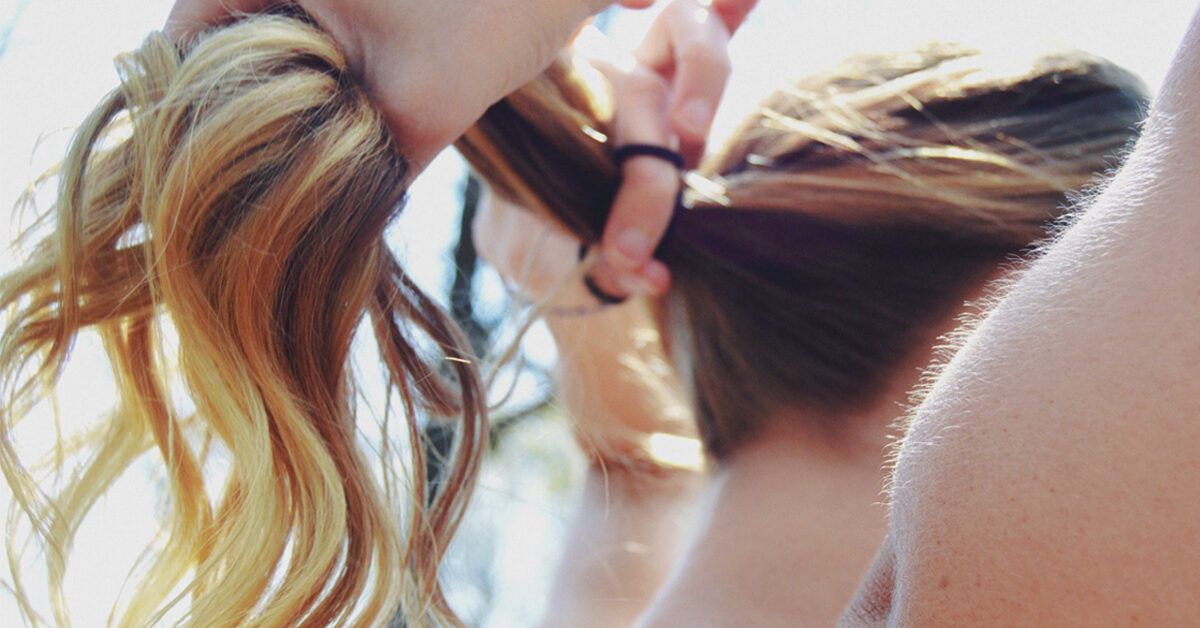
8. Hair ties
Hair ties are must-haves for keeping your hair out of your face while working out.
The problem with hair ties is that they pull on the scalp and hair cuticle. You may even notice some hair falls out every time you undo your ponytail.
You can fix this by wearing your hair down once in a while, or by making your updo a bit looser so it doesn’t pull on your hair so much.
Also, make sure you’re wearing real hair ties and not just rubber bands that can damage your hair.
9. Incorrect brushing and combing
You may have heard that brushing your hair 100 strokes a day is good for your hair, but the AAD says that’s simply a myth. They recommend that you instead only brush and comb when styling your hair.
Make sure you use wide-tooth combs to prevent breakage. You should also only use a brush when your hair is dry, and avoid using plastic bristles. Try a brush with natural bristles instead.
10. Lack of hair trims
It may seem like cutting your hair can damage it. Ironically though, hair trims may help keep your hair healthy and free of split ends.
You can think of a hair trim like you would skin exfoliation — in both instances, you may need to remove some of the old cells to help new ones grow. When you have split ends, these splits in the cuticle can travel up the rest of the length of your hair and possibly lead to breakage.
Even if you’re growing out your hair, trimming damaged ends could prevent further breakage.
»Learn more:How Often Should You Actually Cut Your Hair?11. Hypothyroidism
Hypothyroidism, or an underactive thyroid, occurs when your thyroid gland doesn’t produce enough thyroid hormones.
Although the thyroid itself is small in size, it plays a large role in keeping your body functioning. This includes your metabolism, heart rate, and even your hair growth.
People with low thyroid might notice excessive hair damage and loss. If you have dry, damaged hair combined with low energy, sudden unexplained weight gain, or depression, visit a healthcare professional for a thyroid check.
12. Eating disorders
If you or a loved one is living with an eating disorder, hair damage is a possible symptom.
This is because some eating disorders cause malnourishment, such as anorexia and bulimia nervosa. In such cases, hair follicles don’t have the nutrients they need to produce new hair, and the process is terminated altogether. You may even notice new hairs that break off in the middle of the growing cycle.
Eating disorders can lead to even more serious consequences and require medical treatment. Reading personal stories of those who have overcome eating disorders may help inspire you or your loved one to seek treatment.
Tips for healthy hair
To prevent future hair breakage, consider the following hair care tips:
- Wash and condition your hair daily, but gently.
- Use a swimmer’s shampoo and conditioner set after going to a pool.
- Try to let your hair air dry when possible.
- Make sure all weaves and extensions are light so they don’t pull on the scalp.
- Consider a new hairstyle that requires less damaging maintenance.
- Eat a nutrient-dense diet to make sure your hair gets all the nutrients it needs.
- Avoid wearing tight hats for fashion — save these for sun protection only.
The bottom line
Possible causes of frequent or regular hair breakage include diet and nutritional deficiencies, dry or heat-damaged hair, psychological stress, certain hair care routines, and underlying conditions such as hypothyroidism.
If you still experience hair breakage after making some changes, it may be time to consult a healthcare professional to rule out any underlying medical issues.